
Scotland — twenty-eight years, one bicycle kick, and the Tartan Army's moment has finally arrived
Scotland are back at a World Cup for the first time since 1998. They earned it in the most dramatic fashion imaginable. Now comes the harder part.

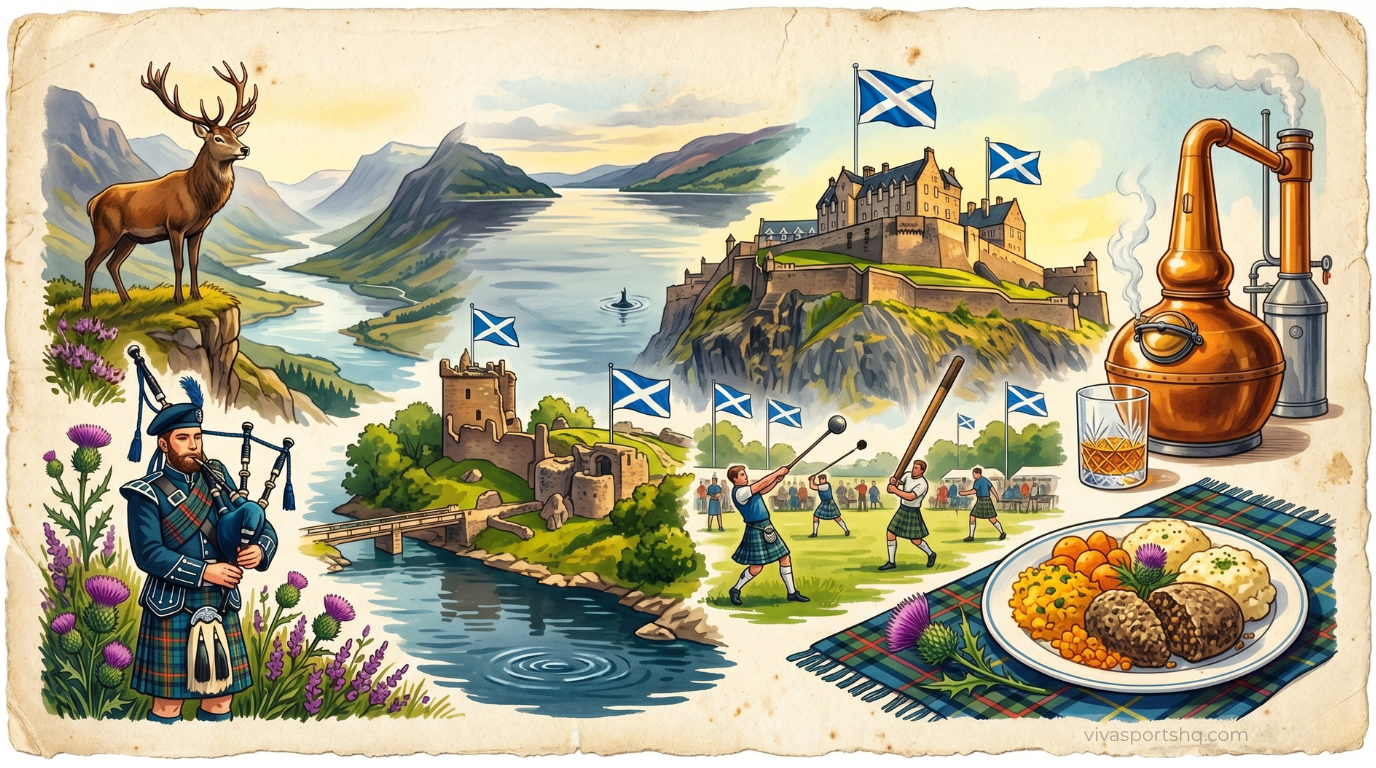
Scotland have not been at a World Cup since France 1998. Twenty-eight years. An entire generation of supporters who grew up watching other nations play in tournaments their country could not reach, who wore the dark blue and believed, edition after edition, that this time would be different. It never was — until Scott McTominay's bicycle kick flew into the net against Denmark in the dying minutes of qualification and an entire nation stopped breathing. That goal, combined with two stoppage-time strikes in the same match, sealed a 4-2 win, topped UEFA Group C, and sent Scotland to North America on a wave of belief that has not existed in Scottish football for three decades. Steve Clarke has been in charge for seven years — longer than any Scotland manager in recent memory — and the squad he has assembled is the best Scotland have brought to a major tournament in that same period. The question is not whether Scotland deserve to be here. They clearly do. The question is whether they can finally break the pattern that has defined their World Cup history: qualify with drama, exit without a win.
Tactical Identity
Strength: Defensive organisation that is genuinely difficult to break down. Scotland conceded just seven goals across their six qualifying matches — a record that reflects not just individual quality at the back but a collective defensive discipline that Clarke has built painstakingly over seven years. Andy Robertson and Aaron Hickey give them one of the most technically accomplished full-back pairings at this tournament, capable of defending with intelligence and contributing to attacks without leaving gaps. In a group containing Brazil, Morocco, and Haiti, that defensive solidity is not just a tactical preference — it is a survival strategy. Weakness: Goals. Scotland's attacking output in qualifying was functional rather than prolific, and their forward options beyond Ché Adams carry significant question marks at this level. McTominay provides goals from midfield — his overhead kick against Denmark was not a fluke but a pattern — yet Scotland do not have a striker who can consistently find the net against top-tier opposition. Against Brazil and Morocco, they will need to be clinical in the moments they create, because those moments will be limited. Wasting them will be costly.
"Scotland in Group C is one of the most interesting stories of this tournament for me. Brazil and Morocco are both there — the same two nations Scotland faced in 1998, when they lost both. History is setting up the narrative perfectly. Whether they can rewrite it depends entirely on McTominay and Robertson finding their best form simultaneously. I think they nick something against Haiti and make it interesting. I genuinely do." — Viviana Reyes, VivaSportsHQ
Key Players
Andy Robertson — Left-back, captain. One of the best left-backs in the world for nearly a decade, Robertson brings Liverpool-level standards to every Scotland training session. His combination of defensive reliability, attacking quality, and sheer leadership makes him the cornerstone of everything Clarke builds. Scott McTominay — Midfielder. Serie A Player of the Year at Napoli in 2024-25, and the man whose bicycle kick sealed Scotland's qualification. The most important attacking player in Clarke's squad, and a player who has genuinely arrived at the top level after years of being underestimated. John McGinn — Midfielder. Eighty-five caps, twenty international goals, and the kind of driving, box-to-box energy that every tournament team needs. McGinn is Scotland's engine — the player who makes them function when the game becomes physical and compressed.
Tournament Prediction
Scotland's group — Brazil, Morocco, Haiti — is as difficult as the draw could have given them. Brazil are Viva's tournament pick. Morocco are one of the most structurally sound teams in the competition. Haiti are beatable. A win against Haiti, a creditable performance against Morocco, and a competitive showing against Brazil is the realistic ceiling. Scotland are unlikely to advance from the group stage, but they are absolutely capable of making their matches meaningful and leaving North America with their heads held high after twenty-eight years in the wilderness. Getting here is the achievement. What they do with it defines the next chapter.
Viva's Verdict
"Twenty-eight years is a long time to wait. Scotland earned this. McTominay, Robertson, McGinn — this is the best squad they have brought to a World Cup in my lifetime. They will not win the group. But they will not embarrass themselves either. The Tartan Army has waited long enough for something to celebrate. I think they get it."
The Road Back
Whatever happens in North America, Scottish football is in a fundamentally different place than it was a decade ago. Clarke has built a qualification machine — consistent, organised, difficult to beat — and the player pipeline running through Scottish clubs and the Premier League is producing genuine quality. McTominay at Napoli, Hickey at Brentford, the younger players coming through — Scotland are no longer a nation that qualifies once in a generation. The 2030 cycle is already in Clarke's sights; he signed a contract extension that takes him there. The era of the Tartan Army watching from home may genuinely be over.