
Cape Verde — the Blue Sharks, the island nation that keeps defying football's logic, and their biggest World Cup yet
Cape Verde are a nation of 600,000 people at a World Cup alongside Spain and Uruguay. They have been defying expectations for a decade. Group H should be very afraid.

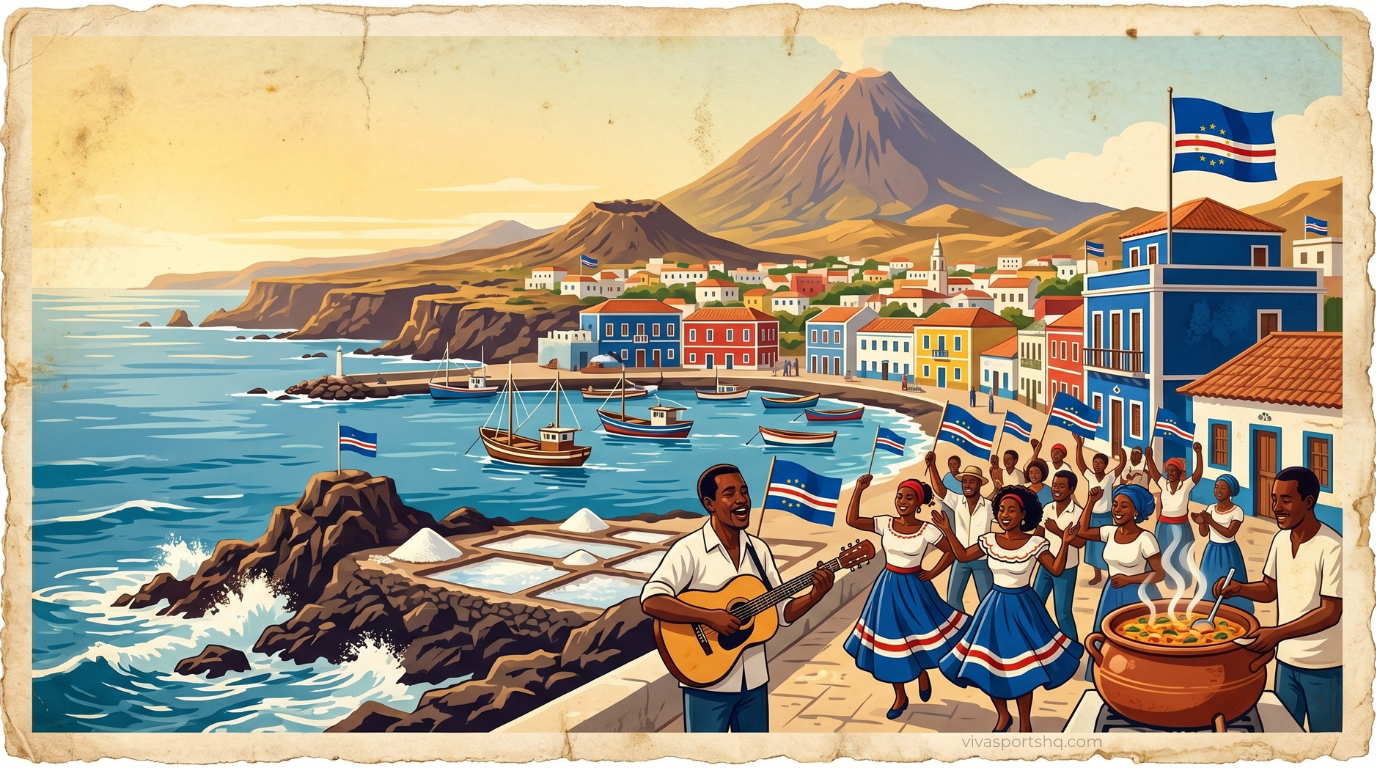
Cape Verde have a population of approximately 600,000 people. They are an island archipelago in the Atlantic with no professional football league of their own, a player pool that depends entirely on the diaspora — primarily in Portugal, France, and the Netherlands — and a football federation with resources that most European lower-league clubs would consider modest. They are also at a World Cup. In Group H with Spain, Uruguay, and Saudi Arabia. This is not a coincidence or a quirk of the expanded format — Cape Verde qualified on merit through CAF, beating nations with vastly more infrastructure and resources. Their previous World Cup appearance in 2022 was their first, and they made it competitive. In 2026 they return with a squad that has grown in experience and confidence and a manager who understands exactly what it takes to get a limited-resource squad to outperform its expected ceiling. Placing them in a group with Spain and Uruguay is one of the tournament draws that looks brutal on paper and occasionally produces something extraordinary in practice.
Tactical Identity
Strength: Defensive organisation and collective spirit built on a squad of players who have chosen to represent a small nation over larger alternatives and carry an emotional investment in the badge that money cannot manufacture. Cape Verde defend with a compactness and intensity that makes them physically exhausting to play against, and their set piece threat — given the physical quality of several players in the squad — is genuine rather than theoretical. They do not give up. That sounds simple. Against Spain for ninety minutes, it is the most important quality they can have. Weakness: The quality gap against Spain and Uruguay is real and significant. Cape Verde's attacking options, while creative and technically capable in the African context, face opponents whose individual quality and tactical sophistication is of a different order. Creating enough chances to win, or even draw, against either of the group's top two sides requires a level of clinical finishing and tactical execution that represents their upper ceiling rather than their baseline expectation.
"Every time I write off Cape Verde, they make me look foolish. A nation of 600,000 people at a World Cup. The diaspora players choosing to wear the blue — that means something. Spain will beat them. Uruguay will probably beat them. But Saudi Arabia? That is a game Cape Verde can win, and if they do, Group H becomes genuinely interesting. Never, ever dismiss the Blue Sharks." — Viviana Reyes, VivaSportsHQ
Key Players
Ryan Mendes — Forward. The experienced winger is Cape Verde's most creative attacker and the player most capable of producing the individual moment that changes a match. His ability to take on defenders and deliver in the final third is the primary source of Cape Verde's offensive threat. Stopira — Defender. The veteran centre-back is Cape Verde's most experienced defensive presence and the player who organises the compact shape that makes them so difficult to break down. His leadership at the back is essential to how they function against superior opposition. Garry Rodrigues — Midfielder/Forward. The technically accomplished player gives Cape Verde a quality in transition that can exploit the spaces that form when opponents commit forward, and his experience across European football adds a tactical awareness the squad depends on.
Tournament Prediction
Group H — Spain, Cape Verde, Saudi Arabia, Uruguay — has Spain as clear favourites and Uruguay as strong second. Cape Verde's realistic path involves beating Saudi Arabia and making both of their other matches sufficiently competitive that a point from Spain or Uruguay is not out of the question. It is a tough ask. Cape Verde have achieved tougher asks before, and that history matters when assessing what this squad is capable of.
Viva's Verdict
"Six hundred thousand people. One World Cup. The Blue Sharks deserve every word written about them because they have earned every minute they get. Spain and Uruguay are too good. Saudi Arabia are not. Cape Verde beat Saudi Arabia, make it uncomfortable for everyone else, and leave North America with their reputation — already remarkable — enhanced further."
The Road Back
Cape Verde's consistent presence in African football's upper tier is one of the quiet success stories of the continent's football development. The diaspora model — bringing players home who developed in Portuguese, French, and Dutch football — has created a sustainable pipeline that larger nations with more resources have struggled to replicate in terms of collective identity and squad cohesion. Whatever happens in Group H, Cape Verde return for the next cycle as a nation that belongs at this level.